By Ken FJ Her — Founder, Brother Tours · Licensed Lao National Tour Guide since 2010 · Updated April 2026
For most of the late 20th century, Long Tieng did not appear on any map. It was listed as a blank valley in northern Laos, a blank that held what was at one point the second-busiest airport in the world — and a covert military operation that shaped the fate of millions of people across Indochina. The operation ended in 1975. The airport closed. The people who lived through it scattered — some to Thailand, some to the United States, many who stayed in the highlands and rebuilt. For nearly fifty years the region sat closed to outside visitors. Today it is possible to visit Long Tieng. But only with the right permits, the right relationships, and a guide who understands what you are looking at. This is a primer — from a Lao-born guide who grew up in these highlands — on what happened at Long Tieng, why it still matters, and how to see it responsibly.
What Was the Secret War?
Between 1964 and 1973, the United States conducted a covert air campaign over Laos parallel to the Vietnam War. Officially, Laos was neutral under the 1962 Geneva Accords. Unofficially, it became the most heavily bombed country per capita in human history — with more than 2 million tons of ordnance dropped across its territory, most of it on the Plain of Jars and the Ho Chi Minh Trail corridors.
The operation had three main arms: aerial bombardment, covert support to Royal Lao Government forces, and the recruitment and training of a Hmong-led guerrilla army in the northern highlands. The ground operation was coordinated by the United States Central Intelligence Agency from a single base in an unmarked valley in Xaisomboun Province. That base was Long Tieng.
Why Long Tieng Was Chosen
The valley sits at approximately 1,100 meters elevation, ringed by karst limestone peaks that create natural protection against both weather and observation. A single airstrip was carved into the valley floor. Around it, over roughly a decade, rose what became the third-largest settlement in Laos — a city of 40,000 people that officially did not exist.
The geography that made Long Tieng defensible also made it nearly impossible to reach overland. For the duration of the Secret War, the only reliable access was by air. That isolation was the point.
What Remains of Long Tieng Today
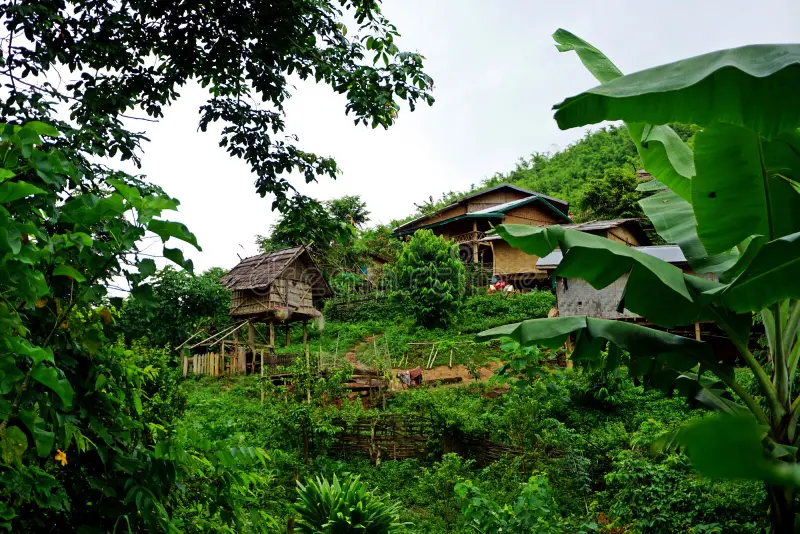
The city is gone. The population dispersed in 1975. The airstrip remains — cracked, weathered, still clearly visible on satellite imagery. A small town has rebuilt at the edge of the former base, populated largely by descendants of those who served there and returned.
What a visitor sees today is not a ruin. It is a working community living on top of a chapter of history that most of the world never formally acknowledged. The airstrip is walkable. Some original buildings remain. The karst peaks still ring the valley as they did sixty years ago. What makes the visit meaningful is not what you see — it is who interprets it for you.
The Plain of Jars Connection
Long Tieng cannot be understood in isolation. It was the command base for a war fought primarily over the Plain of Jars — the UNESCO World Heritage landscape in Xiengkhouang Province where thousands of Iron Age megalithic stone jars have stood for over 2,000 years.
During the Secret War, the Plain of Jars was one of the most heavily bombed landscapes on Earth. Bomb craters are still visible across the archaeological sites. Some of the original jars were shattered by ordnance. The communities who live on the plain today work around UXO — unexploded ordnance — that remains buried in the soil.
A complete visit requires both regions. Long Tieng to understand where the decisions were made. The Plain of Jars to understand what those decisions did to a landscape and the people living on it.
Why This History Matters Beyond Laos
Three reasons this story deserves attention from travelers outside Laos:
The Secret War created the largest Hmong diaspora in history. An estimated 300,000 Hmong people fled Laos after 1975 — many to Thailand, and then to the United States, France, Australia, and Canada. The Hmong-American communities in Minnesota, California, and Wisconsin trace their origin directly to this war.
The UXO legacy continues today. More than 80 million unexploded cluster bomblets remain in Lao soil. People are still killed and injured by them every year — most of them farmers, children, and scrap-metal collectors. Organizations like MAG and UXO Lao continue the clearance work, decade by decade.
The war shapes how Laos relates to its own history. Visitors who arrive without this context often leave confused by how quiet and closed-off parts of the country feel. Understanding the Secret War is part of understanding why.
How to Visit Long Tieng Today
Independent travel to Long Tieng is almost impossible for non-Lao nationals. The region requires provincial-level permits, advance notice, and in many cases local sponsorship. Most individual travelers who attempt the trip are turned back at checkpoints.
Visiting with a licensed Lao tour operator solves this — but not every Lao operator holds the relationships needed. Many do not run the route at all because the logistics are harder than commercial tours justify.
The route that works runs from Vientiane through Xaisomboun, into Long Tieng, and onward to Xiengkhouang and the Plain of Jars. Total time: 5 to 7 days, depending on depth. It is best traveled November through February — outside those months, the mountain roads and weather make the journey risky.
What to Read and Watch Before You Go
The Ravens by Christopher Robbins — the definitive history of the American pilots who served in Laos during the Secret War.
The Most Secret Place on Earth (documentary) — German documentary filmmaker Marc Eberle’s careful treatment of Long Tieng, widely regarded as the best visual introduction to the operation.
The Spy Who Loved Us by Thomas A. Bass — on Pham Xuan An, useful for understanding the broader Vietnam War intelligence context in which Laos operated.
Legacies of War — the nonprofit’s educational materials on the UXO legacy are excellent and available free online.
A good traveler will arrive having already heard the Western version of this history. The journey itself fills in the Lao version — which is the version that rarely reaches English-language audiences.
How Brother Tours Runs This Route
Brother Tours was founded in 2018 by Ken FJ Her, a Lao National Tour Guide licensed since 2010 and born in the highlands that hold this history. This gives our journeys access that commercial operators cannot replicate.
The Hidden Highlands journey is 5–7 days, capped at 6 guests, and runs only November through February. It moves through Vientiane, Xaisomboun, Long Tieng, and Xiengkhouang, with an optional extension to Luang Prabang. Accommodation throughout is 3–4 star independent boutique — the best available in each region.
The journey is led personally by Ken when his schedule permits. When he cannot lead, a senior Brother Tours Journey Host trained directly by him delivers the same standard.
We do not run this route in the wrong season. We do not compress it into shorter trips. We do not combine groups. If the only way to do a thing well is to do it carefully, then we do it carefully.
Is This Journey Right for You?
This journey is built for travelers who want to understand a country, not photograph it. It suits:
• Readers and documentary viewers with an existing interest in 20th-century history
• Travelers whose understanding of the Vietnam War and Indochina needs the Lao perspective
• Americans seeking a responsible way to engage with this shared history
• Europeans, Australians, and others who value cultural depth over tourist comfort
• Guests comfortable with 2–4 hour drives and 3–4 star accommodation rather than 5-star luxury
It is not right for travelers looking for a light cultural tour, a photo itinerary, or a relaxed beach-adjacent Southeast Asia experience. Those are wonderful journeys — they are simply different ones.
Closing Thought
When travelers visit the Plain of Jars, most leave impressed by the archaeology. When travelers visit Long Tieng with the right guide, most leave changed by the history.
The difference is in the telling. No tour company can fake that kind of telling. It comes from growing up in a place, with relatives who remember, with a language that holds the local version of events, and with the patience to share it accurately with visitors who have only ever heard one side.
That is what Brother Tours was built to offer — and why this journey exists.
If this history draws you, the Hidden Highlands of Laos journey is how Brother Tours guides it. 5–7 days through Xaisomboun, Long Tieng, and Xiengkhouang, led by a founder born to this history.
Message us directly on WhatsApp: +856 20 55 989 894
Author Bio
Ken FJ Her is the founder of Brother Tours and a licensed Lao National Tour Guide since 2010. Born and raised in the Lao highlands with a monastery education background, Ken built Brother Tours in 2018 to offer travelers the kind of Laos journey that only locals can provide. Brother Tours is the #1 ranked tour operator in Vientiane on TripAdvisor.
