 Laos
Laos
Luang Prabang: 4-Day Explorer Tour
Price confirmed on request
Details Luang Prabang: 4-Day Explorer Tour
UNESCO heritage, Mekong cruises, waterfalls, village visits, and slow cultural days.
Most people give Luang Prabang two nights. Almost all of them wish they had given it four.
The town is small — you can walk its heritage peninsula end to end in twenty minutes — but it does not reward being rushed. Its best hours are early and late, and the middle of the day is for doing very little. That rhythm is the whole experience, and a two-night stop misses it entirely.
A former royal capital on the confluence of the Mekong and the Nam Khan, listed by UNESCO in 1995 for a townscape that survived what the rest of the region lost — French colonial shophouses and gilded Lao monasteries on the same street, largely intact.
Roughly thirty working monasteries sit inside the old town. That matters day to day: the town keeps monastic hours, and it is quieter than any comparable heritage town in Southeast Asia.
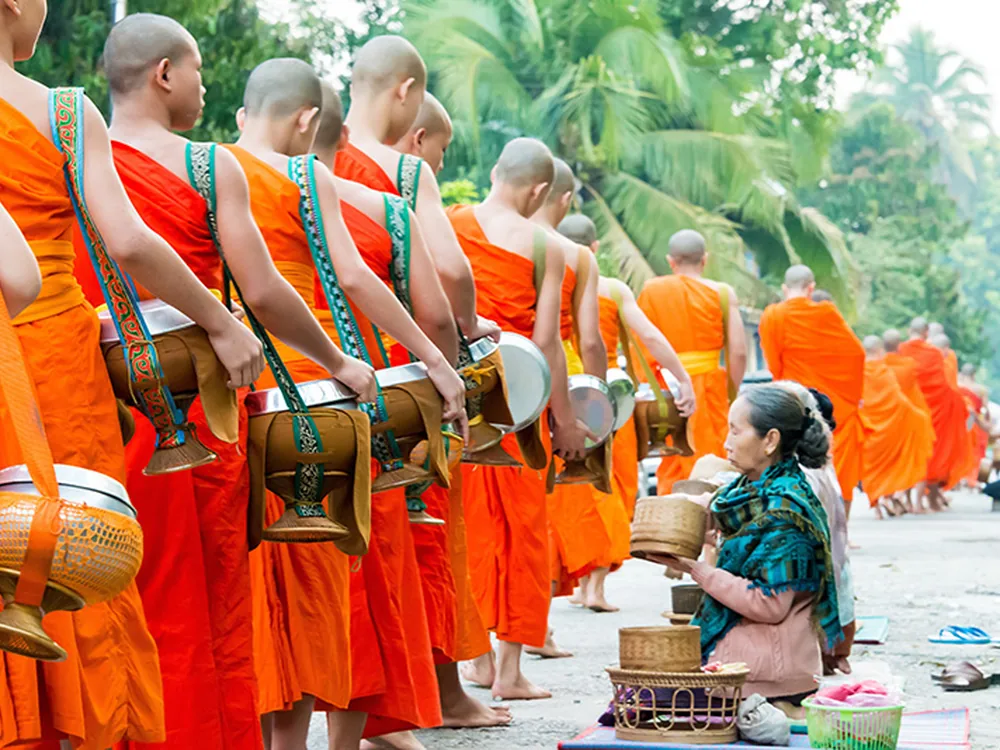
Before dawn, monks walk the streets to receive food. It is a genuine daily religious practice, not a performance, and it has been damaged by visitors treating it as one.
If you watch it: stay across the street, stay seated or kneeling below the monks, do not use flash, and do not buy food from the vendors who will approach you at five in the morning — that rice is often poor quality and the transaction turns a religious act into a tourist one. Our guides will position you properly and explain what is happening. Or they will tell you to skip it, which is sometimes the right advice.
Thirty kilometres south. Limestone pools in a stepped series, turquoise in the dry season, brown and thunderous in the wet. There is a bear rescue sanctuary at the entrance. Go at opening or late afternoon — between ten and three it is busy in a way that removes the point.
Two caves in a cliff at the Mekong and Nam Ou confluence, holding thousands of Buddha images left over centuries. Reached by boat, about two hours upriver. The caves are modest. The river journey is the reason to go, and it is a good one.
The hill in the centre of town, three hundred-odd steps, a view over both rivers. It is also where every visitor in Luang Prabang goes at six in the evening. Go at sunrise instead, or climb from the quieter Nam Khan side.
Two nights: the town, one waterfall, one sunset. You will feel rushed.
Three nights: add the river and Pak Ou, and one slow morning. The sensible minimum.
Four or five: add a village day, a cooking class, and a day where nothing is scheduled. This is where people fall for the place.
November to February — dry, cool mornings, the clearest light. Best weather, highest demand; book December and January early.
March to May — hot, and quieter. March and April can bring agricultural burning haze, worth knowing before you book.
June to October — wet, green, humid. Rain is usually a heavy afternoon hour rather than all day. Waterfalls at their best, fewest visitors, best rates.
Pi Mai, Lao New Year, falls in mid-April and Luang Prabang is one of the best places in the country to experience it. It is also the busiest week of the year.
The Laos–China Railway reaches Luang Prabang from Vientiane in around two hours, against most of a day by road. It has changed how people move around the country. The station sits outside town, so you will need a transfer. Booking as a foreign visitor is less obvious than it should be — our LCR e-ticket guide walks through it.
Luang Prabang International also has regional connections, and the two-day slow boat from Huay Xai on the Thai border is a genuine experience if you have the time.
“Kopchai for planning such a beautiful trip for us at a short notice. All the places to visit and the activities were quite involving and we enjoyed a lot.”
Madhumitha Meher, Google review
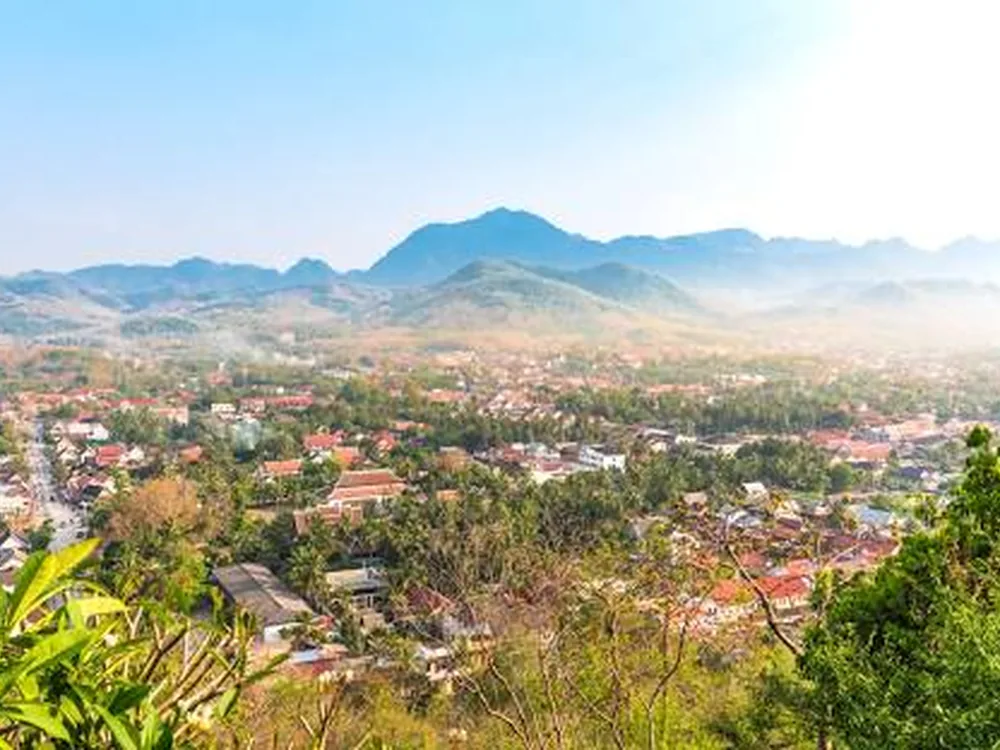
Luang Prabang
UNESCO heritage city — morning alms, the old royal palace.
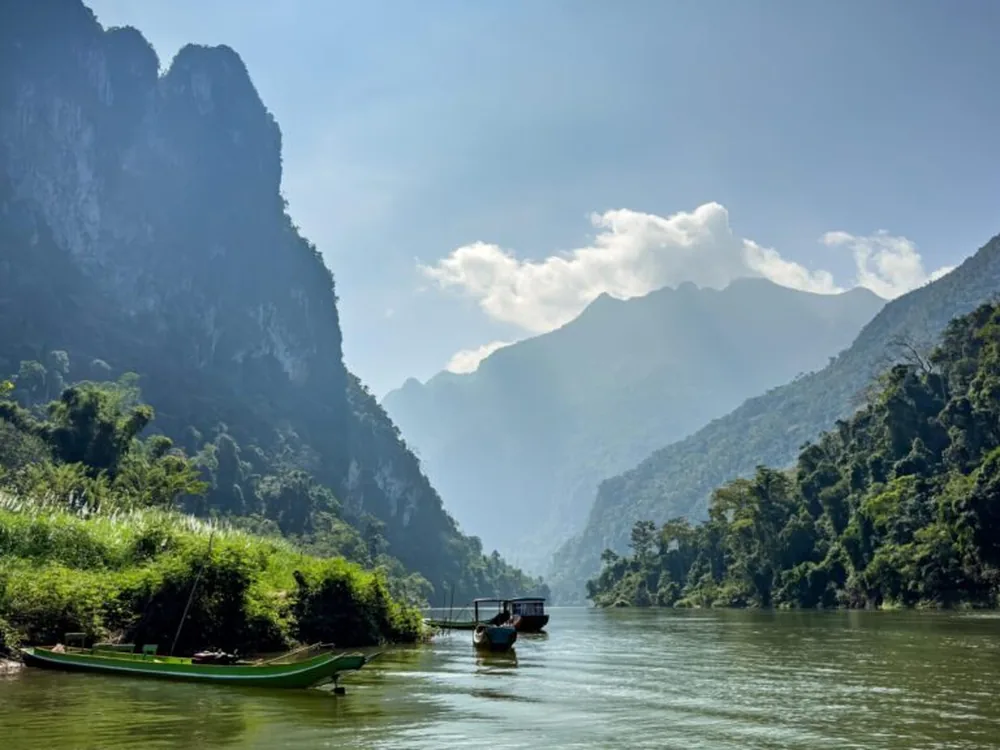
Nong Khiaw
Karst-valley village — viewpoints and kayak country.
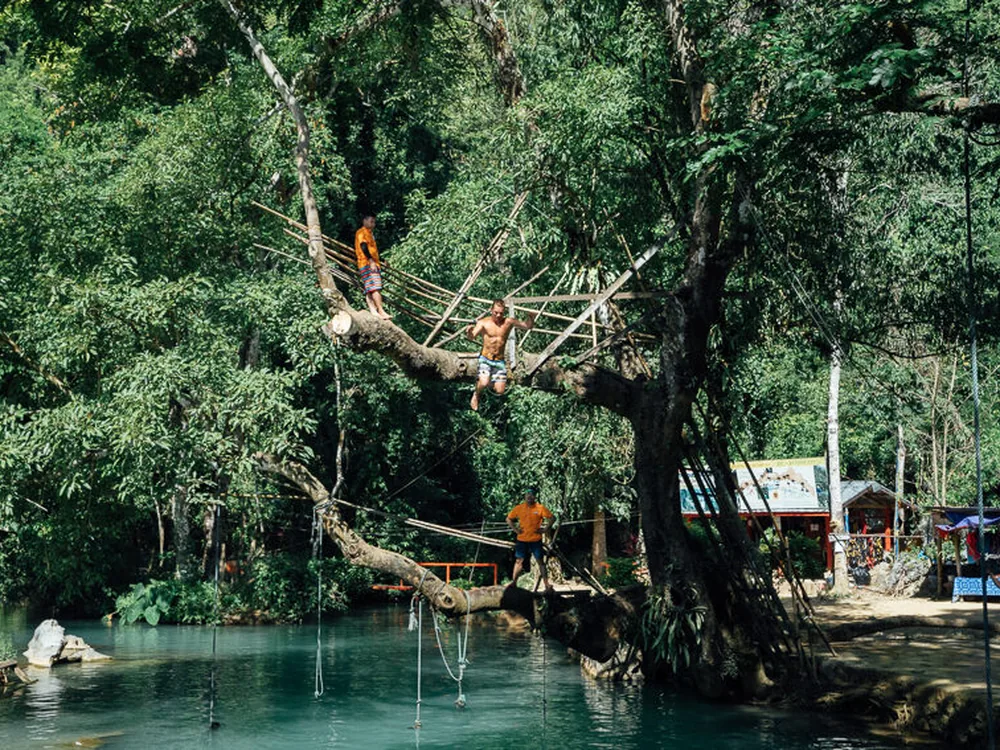
Vang Vieng
Limestone lagoons, quieter than its reputation.
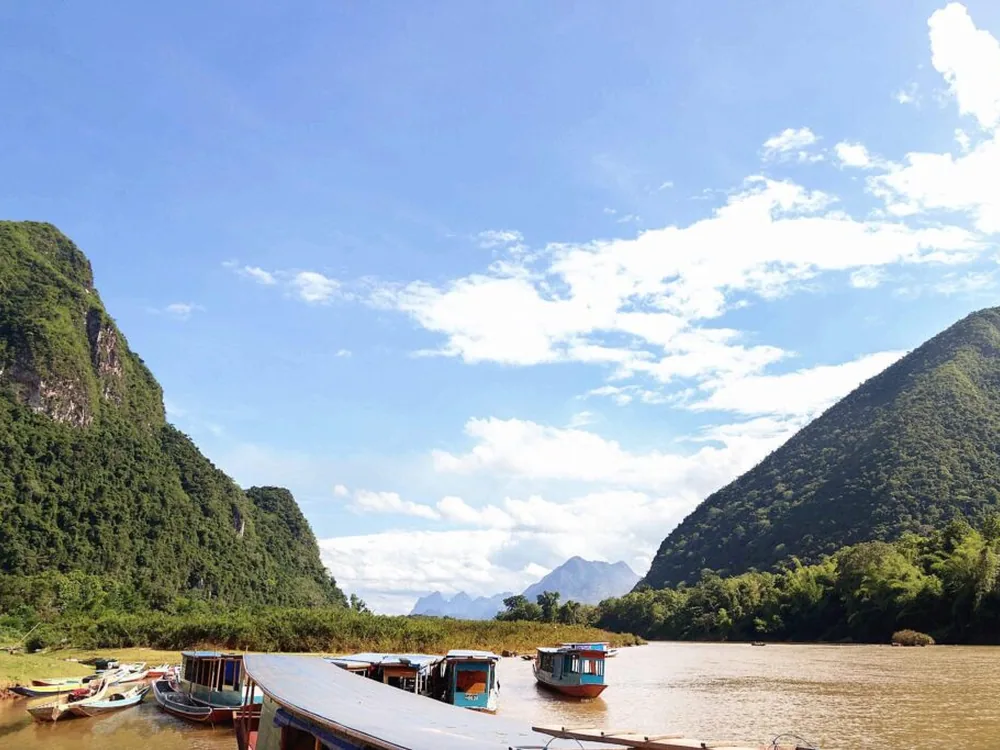
Plain of Jars
Iron-age stone vessels across the Xieng Khouang plateau.
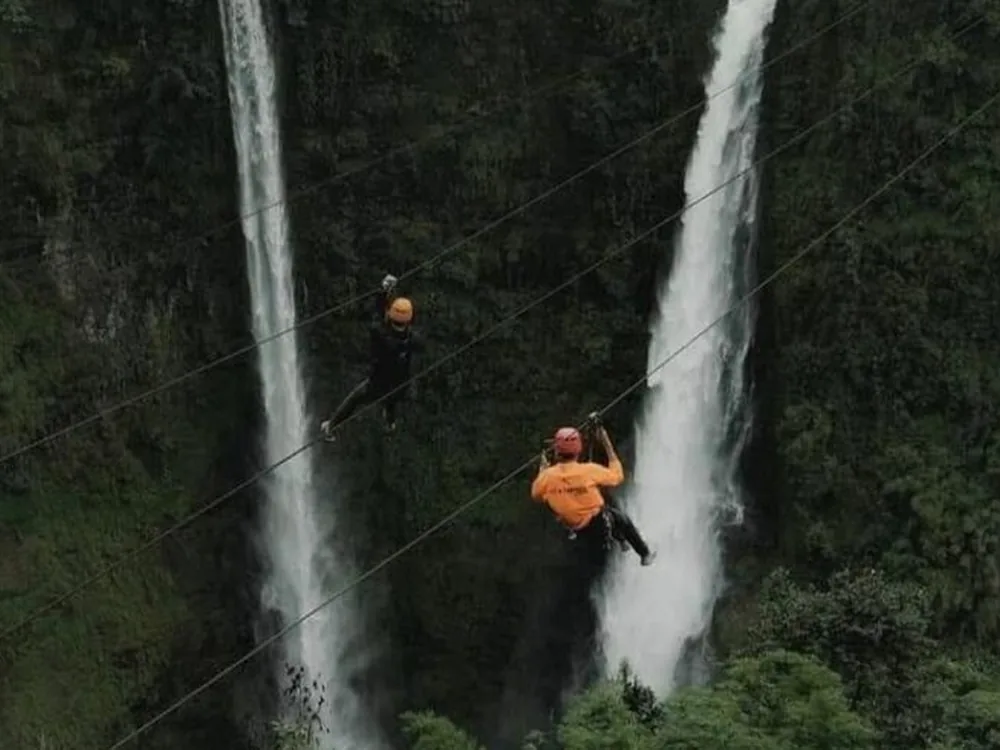
Pakse & the Bolaven
Coffee plateau, waterfalls, and the road south.
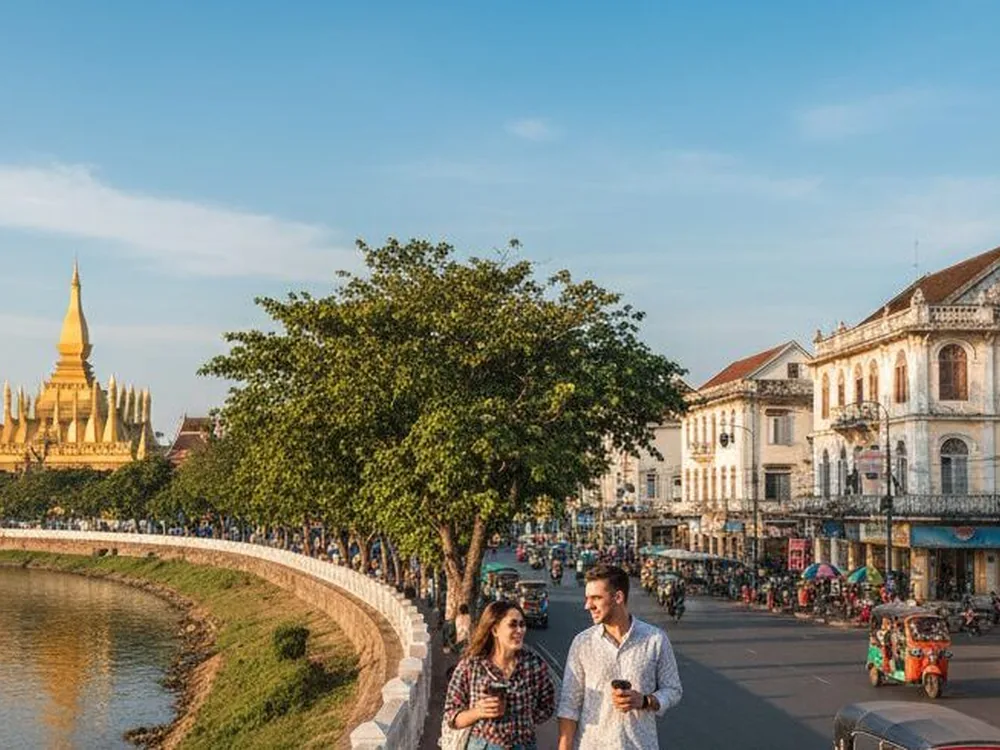
Vientiane
The riverside capital — temples and a slow evening market.
4,000 Islands
Where the Mekong braids — Don Det, Don Khone, the falls.
The Nam Ou
A slow boat threading the river between karst walls.
Laos
 Laos
Laos
 Laos
Laos
1-Day Of Luang Prabang Cultural & Kuangsi Waterfall Tour Immerse yourself in the vibrant culture and natural beauty of Luang Prabang with this one-day tour. Start your journey by exploring the city’s UNESCO World Heritage sites, including the renowned Wat Xieng Thong, celebrated for its intricate mosaics and spiritual ambiance. Next, visit the Royal Palace […]
We design your journey, your way. 24-hour reply from Vientiane — no pressure, no upselling.